Health and Safety Policy for Office Clearance Battersea
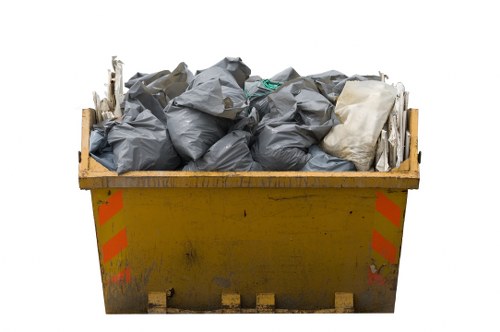 This Health and Safety Policy sets out the principles, responsibilities and procedures for safe office clearances carried out by our team. It applies to every project involving office clearance Battersea and related site activities, including desk and furniture removal, paperwork handling, and light demolition of non-structural fittings. The aim is to protect staff, contractors, clients and visitors by identifying hazards, reducing risks and ensuring consistent safe working practices across the rubbish collection and waste removal operations.
The policy covers the full scope of our office clearance service in Battersea, emphasising prevention, control and continual improvement. It recognises that operations such as bulky waste handling, electronic waste segregation and confidential document disposal require tailored controls. Managers will ensure that appropriate risk assessments and method statements are prepared and that safe systems of work are implemented for each clearance job, proportional to the scale and complexity of the task.
 Roles and responsibilities are clearly defined to secure accountability at all levels. Supervisors must ensure crews receive briefings on site-specific risks and that personal protective equipment (PPE) is worn and maintained. Operatives are required to follow instructions, use equipment safely and report hazards promptly. The company safety lead will monitor compliance, review incidents and update procedures as needed to reflect changes in work methods or regulatory expectations for rubbish clearance Battersea and similar service areas.
Risk Assessment and Safe Systems
All office clearance tasks will be preceded by a site-specific risk assessment. Assessments will identify physical hazards (manual handling, slips, trips and falls), chemical risks (cleaning agents, toner cartridges), biological risks (mold, contaminated items) and environmental considerations (recycling, hazardous waste species). Controls include elimination, substitution, engineering controls, administrative measures and PPE. Where necessary, specialist contractors will be engaged for asbestos, large electrical items or other hazardous materials. Safe systems of work will be documented in method statements and communicated to staff. Key measures include proper lifting techniques, two-person handling for bulky items, clear routes for internal and external access, and secure storage of materials awaiting disposal. The company promotes the use of trolleys, sack trucks and protective footwear to reduce manual handling injuries during rubbish clearance and waste removal Battersea projects.
Training, Competence and Communication
Training is central to maintaining a safe workforce. Induction, task-specific instruction and refresher sessions will be provided to ensure competence in equipment use, waste segregation and emergency response. Toolbox talks will highlight common risks on job sites and any particular issues discovered during risk assessments. Communication channels will be kept open so operatives can raise concerns and suggest improvements without delay.Waste segregation and disposal procedures form a critical component of this policy. Recyclable materials, secure confidential waste and general refuse are to be separated at source and handled according to company protocols. Electronic waste will be processed separately, ensuring data-bearing devices are treated in line with secure destruction requirements. The policy encourages reuse and donation of suitable items to reduce landfill impact while ensuring compliance with environmental obligations relevant to a rubbish company service area.
 Emergency procedures are documented and practiced. In the event of an injury, spill or other incident, staff will follow the established reporting process, provide first aid if trained and isolate hazards where safe to do so. Evacuation routes and assembly points will be identified during site briefings. Incident reporting supports investigation, identification of root causes and implementation of corrective actions to prevent recurrence.
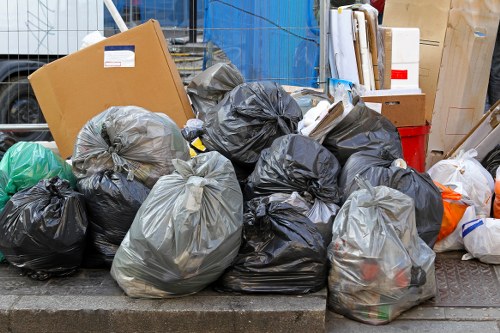 Monitoring, review and continuous improvement ensure the policy remains effective. Regular site inspections, audits and performance reviews will measure compliance with the policy and identify opportunities for improvement. Records of training, risk assessments and incident investigations will be maintained to demonstrate due diligence and to inform ongoing risk control measures. Management will review this policy at least annually or following significant changes to operations.
Personal Protective Equipment and Equipment Safety PPE requirements are specified for each task and must be used as instructed. Items such as high-visibility clothing, gloves, eye protection and steel-toe footwear are examples of controls commonly applied during office clearance activities. All mechanical aids and vehicles used in waste removal operations must be inspected and maintained in line with manufacturer guidance to ensure safe operation.
Reporting and accountability are essential. Any hazard identified in the course of delivering office or rubbish clearance services should be reported immediately through the prescribed channels. Supervisors will act on reports, prioritise remedial actions and ensure follow-up. This transparent process supports a culture of safety where staff feel empowered to act without fear of criticism.
Implementation of this policy is the responsibility of every employee and contractor engaged in clearance activities. By following the procedures described here, the business commits to delivering safe, efficient and responsible office clearance and rubbish removal services while protecting people, property and the environment. The company will communicate the policy to all relevant parties and ensure accessible copies are available to staff.
