Office Clearance in Battersea

Office Clearance Battersea provides a focused clearance service for workspaces that need equipment, furniture and general contents removed in a tidy, organised way. The service suits companies moving premises, reconfiguring rooms, closing a suite or simply making better use of an office footprint. We handle the practical side of the clear-out so the space can be returned in a clean and workable condition, with attention to separating items that can be reused, recycled or disposed of responsibly.
Our office clearance work covers desks, chairs, filing cabinets, shelving, meeting-room items, reception furnishings and routine office clutter. Where access is tight or the property is shared, the clearance can be planned to keep disruption down and to suit the building layout. If you are comparing options, you can start with the type of items to be cleared and the level of access available, then ask for a quotation based on the practical details.
For a broader view of what we handle, the office clearance service explains how different workplace items are dealt with, while our business waste removal page is useful if your job includes mixed commercial waste as well as furniture. If you are ready to talk through a workplace clear-out, the final step is simple: request a quote when you have the item types and access details to hand.
What an office clearance can include
An office clearance is rarely just a matter of lifting furniture. In many workplaces, the job also involves disconnected equipment, archived paperwork, storage pieces, kitchen items, display materials and the small contents that build up in drawers, cupboards and shared rooms. A clear plan helps us separate what can be removed immediately from items that may need more careful handling, especially where there are sensitive documents, electrical goods or awkwardly placed storage units.
We can clear single rooms, suites, floors or complete premises, depending on what needs to go. That may include workstations, pedestals, boardroom tables, reception seating, storage units and loose office equipment. Some clearances need a staged approach so that important items remain available until the end of the working day, while others are best handled in one visit once the space has been vacated. The aim is to leave the area ready for its next use rather than simply emptying it.
When planning the job, it helps to note the scale of the clearance and any pieces that need special treatment. A few details can make the process smoother:
- the floors, rooms or departments involved
- the main furniture and equipment types to be removed
- whether any items must stay in place
- the access arrangements for lifts, stairs or loading areas
Furniture, fixtures and everyday office contents
Many office clearances in Battersea are led by furniture. Desks, stackable chairs, filing cupboards, cabinets, shelving, conference tables and reception furniture are common examples, and each item may need a slightly different approach. Larger pieces often need to be dismantled before removal, while lighter items can usually be carried through the building more directly. We focus on moving the contents out in an orderly way so the site remains manageable throughout the clearance.
Furniture clearance is often most efficient when it is planned alongside other contents of the same space. A room that still contains boxed materials, monitors, screens, small appliances or miscellaneous office supplies can take longer to process than a bare room with only furniture remaining. That is why we look at the whole clearance picture rather than treating each item in isolation. If you are unsure whether something belongs in the job, it is normally better to list it than to leave it out.
The furniture clearance page gives a clearer picture of how standalone pieces are handled, and the furniture disposal page is relevant where items are beyond reuse and need to be removed for disposal. If a room has become cluttered with mixed contents over time, this kind of joined-up approach can make the job feel much more straightforward.
Business premises, shared spaces and changeovers
Office clearances are often tied to business change rather than routine waste. A lease end, a refurbishment, a consolidation into fewer rooms or a move to another address can all require the contents to be removed efficiently and in sequence. In those situations, the work needs to respect the building schedule, neighbouring occupiers and the order in which areas become available. That is especially relevant where corridors, lifts or shared entrances are involved.
We can support clearances for offices that are being handed back, as well as workplaces that are being reorganised for a new layout. Business clients often need a service that deals with a mixture of bulky furniture, smaller office items and general waste from the same location. Our approach is to keep the plan practical and proportionate to the site, so the clearance fits the commercial setting rather than forcing the setting to fit the clearance.
The business waste removal service is helpful if you need regular removal of commercial waste alongside a one-off clearance, and the pricing and quotes page sets out the sort of details that help shape a quotation. If you are preparing a workplace move or closure, a short checklist of rooms and item types is often enough to begin.
Office equipment, mixed contents and practical decisions
Not every item in an office is large, but smaller contents still matter. Monitors, printers, keyboards, archived files, stationery, kitchenware, decorative items and storage contents can all affect the time needed for a full clearance. Mixed jobs are common because an office rarely reaches the end of its use with only furniture left behind. The better the mix is understood in advance, the easier it is to plan the right removal sequence.
We do not assume that every workplace contains the same kind of waste. Some offices are mostly fitted out with modular furniture, while others have dense storage, technology, or items from multiple departments that have been accumulated over time. The work can therefore be tailored to the actual contents rather than a standard pattern. This is useful where several teams have occupied the same area or where a room has changed purpose over the years.
If your clearance includes domestic-style pieces as well as office items, the home clearance page may also be relevant for understanding how mixed contents are approached. For loft-style archives, storage or overflow material, the loft clearance page provides another useful reference point. The main goal is always the same: remove the right items, in the right order, without turning the clearance into an unnecessary disruption.
About Battersea

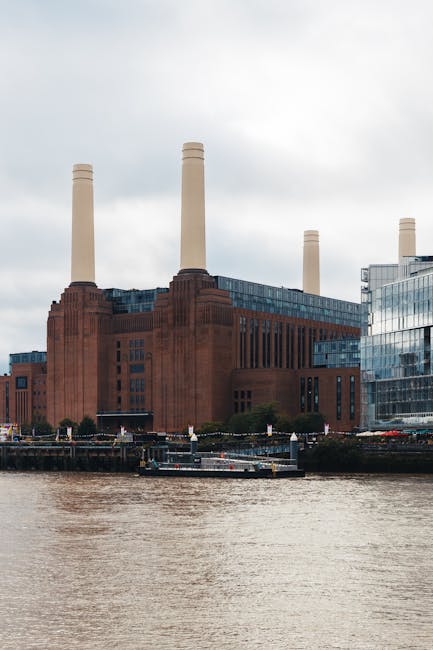
Battersea is a district in south-west London on the south bank of the River Thames, forming part of the London Borough of Wandsworth. It is shaped by a long river edge, older residential streets, railway corridors and significant redevelopment around former industrial land. Battersea Park is one of its best-known open spaces, laid out on reclaimed marshland in the nineteenth century and now providing formal gardens, broad paths and views across the river. The park’s lakes, tree planting and sports facilities give it a distinct public landscape, while nearby streets retain varied Victorian and later housing forms. Battersea Power Station is another prominent landmark, notable for its large brick structure and for the transformation of the surrounding area from power generation use to a mixed urban quarter. The district has long been associated with river trade, rail links and industry, yet it also contains quiet residential pockets and civic spaces that reflect later urban planning. Clapham Junction, on Battersea’s eastern edge, is one of London’s major rail interchanges and has helped shape the area’s movement patterns and development. Battersea also includes stretches of waterfront promenade, local shopping streets and a mix of converted buildings, school sites and newer apartment blocks. This combination of industrial heritage, transport infrastructure, parkland and changing architecture gives the area a layered character that is easy to recognise on foot. The riverfront, the park and the station area together illustrate how Battersea has evolved from a working district into a place with a strong residential and cultural presence, while still showing the marks of its commercial and transport past.
Clearance planning, access and item handling
A well-run office clearance depends on access as much as on the contents themselves. Lifts, stairways, shared corridors, loading bays and vehicle waiting restrictions can all affect how the work is organised. Where access is straightforward, the removal can often proceed in a steady sequence. Where it is limited, the plan may need to account for smaller loads, timed entry or extra care around common areas. The aim is to keep the job controlled and to avoid unnecessary interference with daily building use.
Items are usually easier to manage when the room is sorted into categories before removal begins. Furniture, electrical equipment, loose paper, boxed materials and miscellaneous contents can each be handled differently. That is why a brief description of the items often helps more than a general label such as “office junkâ€. It allows the clearance to be arranged around what is actually present, not just what might be expected in a typical workplace. Clear identification also helps if certain objects need to remain onsite for staff, contractors or landlords.
Where mixed contents are involved, the garage clearance page can be a useful comparison for bulk items and stored belongings, while the house clearance page shows how multiple room types can be dealt with in one organised visit. If you are gathering information for a quotation, one short note about access and one note about the main contents is usually enough to begin.
How we approach responsible disposal and reuse
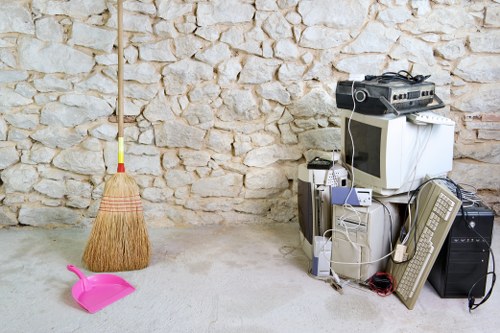
Office clearances often produce a blend of items that may be reusable, recyclable or simply ready for disposal. A responsible approach starts with separating those streams sensibly rather than treating everything as the same kind of waste. Desks and chairs, for example, may be assessed differently from damaged fixtures, while electrical items often need particular attention because they cannot be handled in the same way as ordinary rubbish. That distinction matters for a tidy and compliant clearance.
Where usable items are present, they can sometimes be directed away from disposal routes if the condition and circumstances make that appropriate. In other cases, worn or damaged materials are better treated as waste and removed accordingly. The important point is that the clearance should reflect the nature of the items, not force them into a single category. This is also where a measured, practical service makes a difference: it is about sensible sorting, not overcomplicating the job.
Our recycling and sustainability page explains the general approach to reusable and recyclable materials, and the waste removal service is useful when your office clearance includes broader mixed waste. If you are working through a list of items, a quick note of what looks reusable and what looks damaged can help shape the right plan.
When an office clearance becomes a wider property project
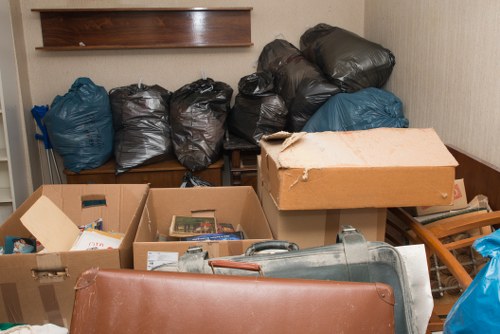
Some clearances go beyond desks and chairs. Offices can include storage rooms, break areas, filing spaces, lofted storage, reception zones and back-of-house areas that have all filled up over time. In those cases, the job becomes a wider property clear-out rather than a simple furniture removal. The best way to approach it is to think about the site as a set of distinct areas, each with its own contents and access considerations. That keeps the clearance orderly and helps avoid repeated handling of the same items.
If a commercial premises contains a mixture of office contents and general household-style belongings, the flat clearance page and the home clearance page can be useful references for the kind of mixed-item removals that occasionally arise in a workplace setting. We do not assume every job is the same, and we do not reduce a whole site to one description when several rooms or content types are involved. The more accurately the space is described, the easier it is to arrange the right scope.
For a direct quotation, send through the main item types, the number of rooms or areas involved and any access notes that matter on the day. That is usually enough to produce a practical response. If you are ready to move forward, request a quotation and we can take the next step with the details in front of us.