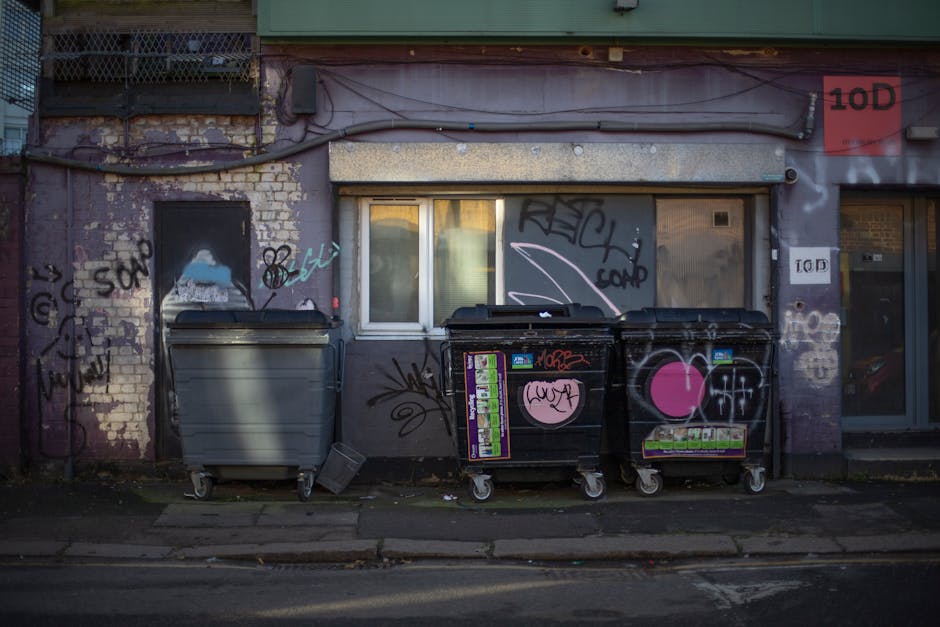
Affordable commercial waste clearance for Battersea shops
If you run a shop in Battersea, waste has a habit of building up quietly and then suddenly becoming a problem. One day it is a few broken boxes and a tired display unit; the next, the back room is full, staff are stepping around stock, and you are wondering how to clear it all without spending a fortune. That is where affordable commercial waste clearance for Battersea shops really matters: it keeps your premises tidy, safe, and workable without turning waste removal into a budget headache.
This guide explains what the service covers, how it works, what affects the price, and how to choose a sensible, cost-effective approach for a local shop. Whether you manage a small independent store, a takeaway, a salon, a convenience shop, or a retail unit with regular clutter, you will find practical advice here rather than vague sales talk. Let's face it, nobody needs more clutter.
Table of Contents
- Why affordable commercial waste clearance matters
- How the service works
- Key benefits and practical advantages
- Who this is for and when it makes sense
- Step-by-step guidance
- Expert tips for better results
- Common mistakes to avoid
- Tools, resources and recommendations
- Law, compliance and best practice
- Options and comparison table
- Real-world example
- Practical checklist
- Conclusion
- Frequently asked questions
Why Affordable commercial waste clearance for Battersea shops Matters
Shop waste is not just "stuff to get rid of". It affects the way your business looks, how smoothly your team works, and how safely customers move around the premises. In Battersea, where many shops operate from compact units, shared entrances, or busy frontage on streets with limited loading space, waste can become a daily friction point very quickly.
Affordable clearance matters because it helps you deal with the practical side of retail without overpaying for a service you do not really need. Many shop owners want a simple answer: clear the waste quickly, keep disruption low, and do it at a price that makes sense. That is a reasonable ask.
Commercial waste in a shop setting can include cardboard packaging, broken shelving, damaged stock, old fixtures, end-of-line display items, renovation debris, and general back-of-house rubbish. If it is left to pile up, it can create trip hazards, block fire exits, attract pests, and make staff morale dip. You will notice the difference in a room almost immediately once it is cleared: more space, less stress, and a better first impression.
For businesses that also handle furniture, refurbishments, or periodic stock refreshes, related services such as business waste removal and furniture disposal can be useful companions to clearance work. That is especially true if you are replacing fixtures or clearing a display area after a redesign.
Expert summary: Affordable clearance is not about choosing the cheapest van on the street. It is about getting the right amount of help, at the right time, with no hidden hassle, and with waste handled properly from start to finish.
How Affordable commercial waste clearance for Battersea shops Works
The process is usually simpler than people expect. A reliable clearance service will look at what needs removing, how much space it takes up, how easy it is to access, and whether any items need special handling. After that, they can usually give a clear quote or estimate before the job begins.
In practical terms, the workflow often looks like this:
- Initial enquiry - You describe the waste, the location, and any access issues.
- Quote or estimate - Pricing is based on volume, type of waste, labour time, and loading conditions.
- Booking a slot - The collection is arranged around your opening hours or quieter trading times.
- On-site clearance - The team removes the waste, often doing the lifting and loading for you.
- Sorting and handling - Reusable, recyclable, and non-recyclable items are separated where possible.
- Final disposal - Waste is taken away and handled in line with applicable requirements and best practice.
That is the broad outline. Of course, the details can vary. A small shop needing only a few bags and some packaging will be different from a retailer clearing broken shelving after a refit. But the principle stays the same: make the job easy to assess, easy to price, and easy to complete without interrupting trade for too long.
For businesses that want to understand pricing more closely before committing, the pricing and quotes page can be a useful starting point. It helps to know what influences cost before you start comparing one provider against another.
In a lot of cases, shop waste can be bundled into broader commercial clearance or general removal work. If your back room has become a mixed bag of cartons, old equipment, and general debris, it may be worth looking at waste removal as the wider service category rather than treating every item separately. Saves time. Saves a headache too.
Key Benefits and Practical Advantages
Affordable clearance is attractive for obvious reasons, but the benefits go beyond price. If you run a shop, the real value is often operational.
- Cleaner space: Less clutter in the stockroom, till area, or rear access zone.
- Safer working conditions: Fewer trip hazards, blocked walkways, and awkwardly stacked items.
- Better customer impression: A tidy frontage and organised shop floor look more professional.
- Less staff time spent on rubbish: Your team can focus on customers and trading rather than lifting and sorting waste.
- Faster turnaround during refurbishments: Useful when changing fixtures, displays, or stock layouts.
- More predictable costs: A proper quote is easier to budget for than piecemeal ad hoc disposal.
There is also a subtle commercial benefit that people sometimes miss: waste clearance helps you use space better. A cramped back room can quietly reduce storage efficiency, which then affects ordering, stock rotation, and access to seasonal lines. Once clutter is gone, operations often run more smoothly without anyone even talking about it.
For shops with older furniture, shelving, or display counters, it can be helpful to combine clearance with relevant disposal or removal support. Furniture clearance is often the practical route when bulky items are taking up too much room and need to go quickly.
And if the work is part of a shop refit or building improvement, you may also need builders waste clearance to deal with plaster, timber, tiles, or packaging left behind after contractors finish. That is one of those details that is easy to miss until you are staring at a pile of rubble at 7 a.m.
Who This Is For and When It Makes Sense
This type of service is relevant for many Battersea businesses, not just big retail units. In fact, smaller shops often benefit the most because they have the least spare room and the least time to deal with waste themselves.
It makes sense if you are:
- an independent retailer with limited storage space
- a convenience store dealing with cardboard and packaging every day
- a salon or barbershop replacing furniture or fixtures
- a cafe or takeaway clearing damaged equipment or waste from a refit
- a boutique refurbishing displays or clearing end-of-season stock
- a landlord or managing agent preparing a unit for a new tenant
- a shop owner dealing with post-delivery packaging build-up after a busy period
Sometimes the need is planned, like after a refurbishment. Sometimes it is reactive. A freezer fails, a shelf collapses, or a delivery leaves more packaging than expected. Do you wait and let it sit there? Usually that only makes the problem bigger.
If your business sits in a mixed-use building or has more domestic-style storage areas above or behind the shop, it can also help to compare with services such as office clearance or home clearance where the wider clearance need includes desks, domestic furniture, or mixed-use spaces. The right solution depends on what is actually on site, not what the sign above the door says.
Step-by-Step Guidance
If you want an affordable result, the easiest win is good preparation. A little organisation before collection day can shave off time, reduce labour, and avoid awkward misunderstandings. Here is the practical way to approach it.
- Separate the waste types
Group cardboard, furniture, fixtures, broken stock, and general rubbish if possible. Even a rough sort helps. - Identify anything unusual
Flag heavy items, sharp materials, electrical pieces, or anything that may need special handling. - Check access
Make sure the team can reach the waste area, use lifts or stairways if needed, and park legally nearby where possible. - Clear a path
Move loose stock or obstacles out of the way. It sounds basic, but it saves real time. - Confirm trading hours
Choose a collection time that does not clash with your busiest customer periods. - Ask about recycling
Good providers should explain what happens to recyclable material and how waste is sorted. - Review the quote carefully
Make sure it covers labour, loading, disposal, and any likely extras before you agree. - Keep records
Store invoices and disposal information with your business documents. It is just good housekeeping.
A decent clearance job should feel orderly. Not rushed, not chaotic. If the team turns up and starts improvising around your shop floor like they are moving house in a thunderstorm, that is a sign to pause and reassess.
For businesses that care about how waste is handled after collection, the company's recycling and sustainability approach is worth reviewing. It is one thing to clear a space; it is another to do it responsibly.
Expert Tips for Better Results
Here are a few practical, lived-in tips that make a real difference.
- Book before the waste becomes urgent. Emergency clearances are usually harder to plan well and may cost more.
- Be precise about volume. "A bit of rubbish" is not enough. Try to estimate bags, boxes, shelves, or cubic space.
- Photograph the load. A few clear photos can make quoting faster and reduce back-and-forth.
- Group bulky items together. Keep awkward items in one accessible area rather than scattered around the shop.
- Tell the team about stairs, narrow entrances, or restricted loading. Access affects time, and time affects cost.
- Ask what is recyclable. Mixed loads are common, but some materials can often be separated more effectively.
- Plan around deliveries. If fresh stock arrives the same morning, clearance can become messy fast. Very messy.
One small but useful habit is to set aside a "waste waiting zone" in the back of the shop. Nothing fancy. Just a consistent place for broken cartons, packaging, or damaged items. It keeps clutter from spreading and makes the next clearance easier to estimate.
If you regularly swap furniture or fixtures, it may be worth combining multiple removal needs in one visit. A single trip can be more economical than several tiny ones. That is especially true for bulky retail furniture, where furniture disposal and clearance often go hand in hand.
Common Mistakes to Avoid
There are a few predictable errors that make clearance more expensive or more stressful than it should be. Good news: they are avoidable.
- Leaving everything until the last minute. Rush jobs are harder to price and harder to fit around your trading hours.
- Assuming all waste is the same. Cardboard, furniture, packaging, and construction debris can all need different handling.
- Not checking access in advance. A van may be cheap on paper, then awkward access turns the job into slow, expensive labour.
- Choosing only on price. The lowest quote is not always the best value if it excludes loading or disposal.
- Forgetting about compliance responsibilities. Business owners still need to think about duty of care and responsible disposal.
- Ignoring recurring waste patterns. If cardboard keeps building up every week, you probably need a regular plan, not a one-off tidy-up.
Another common slip? Not checking whether something is actually waste or whether it could be reused, donated, or kept for another part of the business. It sounds obvious, but when you are busy, you can bin useful things almost by accident.
For shops involved in redesigns or fit-outs, do not overlook mixed waste from the works themselves. If you only arrange general clearance and forget the post-build mess, you can end up paying twice. Annoying, and entirely preventable.
Tools, Resources and Recommendations
You do not need a complicated toolkit to manage shop waste better. A few simple systems are usually enough.
- Waste log: Keep a basic note of what gets thrown out, how often, and where it comes from.
- Photo record: Useful for quoting, budgeting, and spotting recurring waste issues.
- Labelled sacks or containers: Helps staff separate cardboard, general waste, and reusable items.
- Storage plan: Decide where waste sits before collection so it does not spread into customer areas.
- Supplier instructions: Ask delivery teams to flatten packaging where possible. Small thing, big difference.
When comparing service options, look for clarity rather than slogans. A good provider should be able to explain what is included, what may change the price, how waste is handled, and what happens if access is difficult. That kind of plain speaking is worth more than a flashy promise.
If you want to learn more about the company behind the service, the about us page is often the easiest place to understand their approach and working style. And for direct booking or a specific question, contact us is the obvious next step.
Law, Compliance, Standards, or Best Practice
Waste from a business is not the same as household rubbish, and that distinction matters. Shop owners should treat waste handling as part of normal business responsibility, not an afterthought. In the UK, commercial waste is generally expected to be managed with care, traceability, and proper disposal arrangements. The exact obligations can vary depending on the material and circumstances, so it is always sensible to stay cautious rather than make assumptions.
In practice, good compliance means:
- using a provider that handles waste responsibly
- keeping basic records or invoices where appropriate
- separating recyclable material where possible
- being aware of hazardous or special items and not mixing them casually with general waste
- making sure clearances do not block fire exits, access routes, or customer safe movement
For shops in older premises or mixed buildings, health and safety deserves a little extra attention. Slips, trips, lifting injuries, and blocked corridors are all avoidable if the waste is managed properly. You do not want a cardboard mountain near the till just because no one fancied sorting it on a rainy Tuesday.
It also helps to work with providers that are clear about their own policies. The pages on health and safety policy, insurance and safety, and terms and conditions can give you a better feel for how professionally the service is run. That kind of transparency matters when the work is happening in your active business space.
For wider trust and operational reassurance, especially if your business cares about ethical supply chains or customer-facing standards, it can also be useful to review modern slavery statement, payment and security, and the site's privacy policy. These are not waste-specific details, but they do help build confidence in the provider's general business practices.
Options, Methods, or Comparison Table
There are a few ways Battersea shop owners handle waste clearance. The best option depends on volume, urgency, and how hands-on you want to be.
| Method | Best for | Pros | Trade-offs |
|---|---|---|---|
| One-off commercial clearance | Occasional bulky waste, refurbishments, or stockroom clean-outs | Simple, fast, flexible | Less efficient if waste is generated every week |
| Regular business waste removal | Shops with ongoing packaging, general waste, or repeated disposal needs | Predictable, easier to plan, often better for routine volumes | May be more than you need for a one-off job |
| Mixed clearance and furniture removal | Refits, shop closures, display changes, new stock layouts | Covers bulky items and general clutter together | Needs more accurate description at quoting stage |
| DIY disposal | Very small amounts of waste | Can feel cheaper at first | Time-consuming, labour-heavy, and not always practical |
To be fair, DIY disposal sounds sensible until you are trying to fit broken shelving into a car at closing time. For most shops, professional clearance is usually the cleaner, safer and more efficient route.
If your clearance involves stockroom furniture, old counters, or shop fixtures, it may also be worth looking at furniture clearance as part of the solution. If the waste is more general and ongoing, business waste removal is often the better fit.
Case Study or Real-World Example
Picture a small Battersea boutique after a seasonal refresh. The shop has replaced display tables, flattened a mountain of packaging, and removed a few tired storage units from the back room. Nothing dramatic, just enough clutter to make the space feel cramped and slightly chaotic.
The owner wants the job done before the weekend rush. Staff cannot spend half a day dragging furniture through the shop, and there is no spare back-of-house space left. The sensible approach is to separate the cardboard from the bulky items, photograph the load, and book a clearance visit that fits between opening hours and a quieter delivery slot.
On the day, the team clears the larger items first, then takes away the mixed waste from the back area. The shop floor is left tidy, the stockroom is usable again, and the owner does not lose a trading day to rubbish. Not glamorous. But genuinely useful.
That kind of job is exactly where affordable commercial waste clearance earns its keep. It is not about drama. It is about removing friction from the business.
Practical Checklist
Use this quick checklist before booking clearance for your Battersea shop:
- Have I identified the main waste types?
- Have I estimated how much space the waste takes up?
- Are there any heavy, sharp, or awkward items to mention?
- Is access clear for the team and any vehicle required?
- Have I chosen a collection time that avoids busy trading hours?
- Do I know whether the waste includes furniture or fixtures?
- Have I asked what the quote includes?
- Do I know whether the provider can explain recycling or sorting arrangements?
- Have I kept records for my business files?
- Do I need one-off clearance or a more regular plan?
Quick takeaway: the more clearly you describe the job, the easier it is to get fair pricing and a smooth clearance. Small detail, but it really matters.
Conclusion
Affordable commercial waste clearance for Battersea shops is really about control. Control over clutter, control over disruption, and control over spend. When the service is planned properly, it saves time, improves safety, and keeps your shop looking like a business that knows what it is doing.
The best results usually come from a simple formula: be clear about the waste, choose the right type of clearance, check access, and work with a provider that explains the process properly. That is the unglamorous truth, but it works.
If your shop is reaching that "we really need to sort this out" stage, do not leave it hanging around any longer than necessary. A tidy space tends to create a calmer business day, and that is worth a lot more than people think.
Get a free quote today and see how much you can save.
Frequently Asked Questions
What counts as commercial waste in a Battersea shop?
Commercial waste usually includes anything produced by your business operations, such as cardboard, packaging, damaged stock, broken fixtures, old furniture, and general back-room rubbish. If the waste comes from trading, a refit, or stock handling, it is typically treated as business waste rather than household waste.
How do I keep waste clearance affordable?
The main thing is preparation. Separate waste where possible, estimate the volume accurately, and make access easy. The cleaner your brief, the less time the team spends onsite, and that usually helps keep the price sensible.
Is one-off clearance better than regular waste removal?
It depends on how much waste your shop produces. One-off clearance is often better for refurbishments, end-of-season clear-outs, or bulky items. Regular business waste removal makes more sense if you generate packaging or rubbish continuously. Different jobs, different fit.
Can furniture be taken away with general shop waste?
Yes, often it can, as long as you explain it upfront. Bulky items such as shelving, counters, tables, and chairs may need a clearer quote because they affect labour and loading. A mixed load is normal in retail settings.
Do I need to sort recyclable waste before collection?
It is not always essential to separate everything perfectly, but it does help. Cardboard and recyclable materials are often easier to process when they are not mixed with general rubbish. Good sorting can also make the whole job more efficient.
How much notice should I give before booking?
As much as you reasonably can. If the job is urgent, same-day or next-day booking may sometimes be possible, but planned clearance tends to be smoother and easier to schedule around your shop hours.
What if my shop has difficult access?
Tell the provider early. Narrow entrances, stairs, shared corridors, or limited parking can all affect timing and cost. It is better to be upfront than to discover access problems on the day. That never ends well.
Can shop waste clearance happen outside opening hours?
Often, yes. Many businesses prefer early morning, late evening, or quieter trading times so the work does not interrupt customers. It is worth discussing this when you request a quote.
What should I ask before accepting a quote?
Ask what is included, how the waste will be handled, whether labour and loading are covered, and whether there could be extra charges for access or item type. A clear quote should feel easy to understand, not like a puzzle.
Is it worth using a clearance service for a small amount of waste?
If the waste is bulky, awkward, or taking up staff time, yes, it can still be worthwhile. Small jobs often look manageable until they start interfering with storage, safety, or customer service. Then they are not so small anymore.
How do I know the waste is being handled properly?
Choose a provider that explains its process clearly and offers transparent information about sorting, disposal, and responsible handling. Pages such as recycling, insurance, and terms can help you judge how seriously the business takes its responsibilities.
What is the smartest first step if my shop is already cluttered?
Take a few photos, make a rough list of what needs removing, and decide what absolutely must go first. Then request a quote and choose a time that causes the least disruption. Simple steps, but they save a lot of friction.