Electricals Disposal Problems in Battersea Flats, Solutions
If you live in a Battersea flat, you already know the awkward bits: a hallway that feels narrower once a broken TV is leaning against the wall, a lift that is too small for a fridge, and a bin area that is never quite designed for a washing machine. Electricals disposal problems in Battersea flats, solutions are not just about getting rid of clutter. They are about safety, access, time, and doing the right thing without turning your corridor into an obstacle course.
Old kettles, microwaves, laptops, chargers, fan heaters, printers, and bulky appliances all create different disposal headaches. Some items are easy to carry but need careful recycling. Others are heavy, awkward, or risky because they contain glass, refrigerant, batteries, or electrical components. In a flat, that mix can become frustrating very quickly.
This guide breaks the problem down in plain English. You will find the main reasons disposal gets difficult in Battersea flats, the practical solutions that actually work, and the mistakes worth avoiding. If you are weighing up a simple flat clear-out or a more involved removal, this should give you a clear next step.
Table of Contents
- Why Electricals Disposal Problems in Battersea Flats, Solutions Matters
- How Electricals Disposal Problems in Battersea Flats, Solutions Works
- Key Benefits and Practical Advantages
- Who This Is For and When It Makes Sense
- Step-by-Step Guidance
- Expert Tips for Better Results
- Common Mistakes to Avoid
- Tools, Resources and Recommendations
- Law, Compliance, Standards, or Best Practice
- Options, Methods, or Comparison Table
- Case Study or Real-World Example
- Practical Checklist
- Conclusion
- Frequently Asked Questions
Why Electricals Disposal Problems in Battersea Flats, Solutions Matters
Electrical items are not ordinary rubbish. That is the first thing to accept, because it changes everything. A flat in Battersea may have limited storage, shared access, and stricter building rules than a house, so even a small pile of unused appliances can create a surprisingly big problem.
There is also the simple inconvenience factor. A dead monitor in the corner is one thing. Three broken items, a box of tangled cables, and an old toaster with a cracked plug? That starts to feel like a mini depot. Let's face it, nobody wants that in a living room that also has to function as a dining room and home office.
The topic matters for three main reasons:
- Safety: damaged items, loose wires, and batteries can be a risk if handled badly.
- Access: flats often have narrow stairs, lifts, or shared entrances that make heavy lifting difficult.
- Responsibility: electrical waste should be treated carefully rather than dumped with general household rubbish.
There is a practical side too. Sorted electrical disposal keeps a flat clear, makes move-outs easier, and reduces stress when the repair pile starts to look permanent. If you are clearing multiple rooms, the problem can spread fast. A few small devices in a cupboard become a whole batch of mixed waste before you know it.
Expert summary: In Battersea flats, the real challenge is usually not just the item itself. It is access, sorting, and making sure electricals are removed in a safe, organised way without annoying neighbours or creating a fire hazard.
How Electricals Disposal Problems in Battersea Flats, Solutions Works
The basic approach is straightforward, even if the logistics are not. First, you identify what type of electrical item you have. Then you separate it from general waste, check whether it needs special handling, and choose the most suitable removal route. In a flat, the route matters almost as much as the item.
Think of it in layers. A small charger is not the same as a washing machine. A broken lamp is not the same as a fridge freezer. Some items are light but cluttered with cables and attachments. Others are bulky, heavy, or hard to move without scratching walls or scuffing shared hallways. That's the everyday reality.
In practical terms, the process often looks like this:
- Gather all unwanted electricals in one place.
- Remove anything personal, stored data, or loose accessories.
- Sort items into small appliances, IT equipment, large appliances, and items with batteries.
- Decide whether the item can be reused, recycled, or needs specialist collection.
- Arrange removal through the most suitable service or collection method.
For flats, the "how" is often shaped by building rules. Some developments have bin stores but no dedicated WEEE area. Others have lift restrictions, concierge access, or timed loading zones. If you are dealing with a larger clear-out, the smoother route may be to combine electrical removal with a broader flat clearance or a wider waste removal service, depending on how much needs shifting.
It sounds a bit obvious, but the right method saves a lot of back-and-forth. And in a Battersea block on a rainy evening, dragging a fridge through a tight entrance is not anyone's idea of fun.
Key Benefits and Practical Advantages
Sorting electrical disposal properly brings more than just a tidy room. The benefits show up in small, practical ways that matter in day-to-day living.
- Less clutter: one removed appliance can make a room feel instantly bigger.
- Safer walkways: fewer trip hazards in hallways, entrances, and shared spaces.
- Better planning: once electrical waste is dealt with, a move, refurbishment, or deep clean becomes easier.
- Reduced stress: you stop wondering what to do with that broken dehumidifier or old TV.
- Cleaner recycling outcomes: electrical components can be handled more appropriately when separated from general rubbish.
There is also a social benefit inside flats. Shared buildings are, by nature, shared. One resident leaving bulky items in a corridor can quickly become a nuisance for everyone else. A tidy disposal plan helps keep things civil. Mildly boring, perhaps. Very useful, absolutely.
For landlords and letting agents, the advantages are even clearer. Electricals removed on time can support quicker re-letting, simpler inspections, and a better first impression. For tenants, it can reduce the final-week chaos that always seems to arrive at the worst possible moment.
Who This Is For and When It Makes Sense
This topic is relevant to a wide range of people in Battersea, not just those in a major move. You may need a disposal solution if you are dealing with one of these situations:
- moving out of a flat and leaving behind unwanted appliances
- replacing old electrical items after a refurbishment
- clearing a spare room, box room, or storage cupboard
- sorting out a tenant end-of-let clean
- removing broken household electronics that have been sitting around too long
- emptying a flat after a change in household circumstances
It also makes sense if the item is too awkward for you to move safely. A light desk fan is one thing. A heavy television or white goods item is another. If stairs are involved, or if the lift is unreliable, the decision becomes simple pretty quickly.
People often wait too long because they think, "I'll deal with it later." Fair enough. We all do that. But electricals have a habit of breeding into piles, especially when chargers, remotes, and miscellaneous cables get added to the mix.
For business owners working from a flat, there is another angle. Old desktop equipment, printers, and monitors can mount up and create both storage and data-handling concerns. In that case, a business-minded route such as business waste removal may be more appropriate than a one-off household solution.
Step-by-Step Guidance
If you want a clean, low-stress approach, use this sequence. It is simple, but it works.
1. Identify every electrical item
Walk through the flat and make a quick list. Include obvious appliances, small electronics, cables, chargers, speakers, lamps, and anything with a plug, battery, or power supply. Do not forget the drawer of mystery adapters. There is always a drawer like that.
2. Separate electricals from general rubbish
Do not mix them. Keep electricals together so they are easier to lift, count, and sort later. This saves time and reduces the chance of items being broken or missed.
3. Check for special handling
Some items need more care than others. Fridges and freezers, for example, should not be handled like a box of old headphones. Items with batteries, screens, or refrigerant are best treated cautiously.
4. Choose the right disposal route
This depends on the item size and how much you have. For a single small device, a simple collection route may be enough. For multiple items or bulky appliances, a more complete removal service is usually easier. If your disposal is part of a bigger household clear-out, look at home clearance or house clearance where relevant.
5. Make access as easy as possible
Clear the path, unlock shared gates if needed, and think about where the items are stored. If you can bring things close to the front door without blocking escape routes or communal access, that helps a lot. Slightly dull preparation, yes, but it pays off.
6. Keep proof and notes where helpful
For landlords, agents, or anyone managing a tenancy, a simple record of what was removed can be useful. You do not need to turn it into a masterpiece. A list is fine.
7. Deal with data-sensitive items carefully
If you are discarding laptops, phones, tablets, or printers with memory, make sure personal data has been removed first. Factory resetting may not always be enough on its own, so take care.
Expert Tips for Better Results
Small choices make a big difference here. After all, the item is only half the story; the building and the timing matter too.
- Group by size before the collection day. It avoids last-minute confusion when the removal team arrives.
- Unplug and untangle cables in advance. Spaghetti cables waste time and add frustration.
- Keep fragile screens protected. A blanket or cardboard layer can prevent scratches and broken glass.
- Check lift size and access times. This matters more than people expect in apartment blocks.
- Do not leave items in hallways. That can create fire and access issues, and it is unpleasant for neighbours too.
- Combine jobs when practical. If electricals are part of a wider declutter, bundling them with furniture or general flat waste is often more efficient.
One useful habit: stand back and ask, "What is the simplest way to move this without making a mess?" That question alone prevents a lot of damage to walls, doors, and tempers.
If the flat is being emptied before sale or let, it can also be helpful to combine electrical removal with furniture disposal so the place is cleared in one pass rather than in dribs and drabs.
Common Mistakes to Avoid
Electrical disposal problems usually get worse because of a handful of repeat mistakes. They are easy to make, which is why they deserve a bit of attention.
- Treating electrical items like ordinary rubbish. That can lead to poor handling and missed recycling opportunities.
- Leaving too much until the last day. The hallway panic is real. Best not to invite it.
- Underestimating bulky appliances. A washing machine is never as simple as it first looks.
- Forgetting batteries. Loose batteries and small powered devices need care.
- Blocking shared areas. This can create unnecessary friction with neighbours or building management.
- Ignoring data on devices. Old phones, laptops, and tablets can still contain personal information.
Another common slip is assuming every electrical item can be dealt with in exactly the same way. Not true. A lamp, a TV, and a freezer each have different handling needs. That is why a quick sort at the start saves time later.
Tools, Resources and Recommendations
You do not need fancy equipment, just the right few basics. In many flats, the practical toolkit is pleasantly ordinary.
- Strong gloves: useful for sharp edges, dusty cables, and awkward plugs.
- Tape or cable ties: keep leads together so they do not unravel everywhere.
- Blankets or soft covers: helpful for screens and glossy appliance surfaces.
- A marker and labels: especially useful if several people are contributing items to the same clear-out.
- Measuring tape: worth having if a bulky appliance needs to pass through a tight doorway or lift.
From a service perspective, it is sensible to look for clear pricing, clear access expectations, and a straightforward plan for recycling. If you want to understand the service side a little more broadly, the company's pricing and quotes page is a useful place to start, and the recycling and sustainability page gives a better sense of how materials are typically handled.
Where you are unsure about what should go where, a quick call or message can save a lot of guesswork. That small bit of clarity is usually worth it.
Law, Compliance, Standards, or Best Practice
This is the section people often skip, then regret skipping later. Electrical disposal in the UK is shaped by the broader expectation that waste should be handled responsibly, with special care for electrical and electronic items. You do not need to become an expert in regulations, but you do need to avoid casual dumping or unsafe storage.
Best practice in a Battersea flat usually means:
- keeping electrical waste separate from ordinary household rubbish
- avoiding the storage of damaged or leaking items in shared spaces
- taking extra care with batteries, screens, and appliances that may contain hazardous components
- making sure access routes in communal buildings remain clear
- using a responsible removal route that aims to recycle or dispose appropriately
If you live in a managed block, there may also be building rules on moving large items, using service lifts, or leaving items in communal areas. Those rules vary, so it is best not to assume. A short check with the managing agent can save a lot of backtracking.
For businesses, landlords, and anyone handling multiple items regularly, keeping a tidy record of removals is sensible. It is not about paperwork for the sake of it. It is about being able to show that items were dealt with properly, especially when the flat is part of a wider portfolio or turnover process.
Good practice in plain English: if an item plugs in, charges, stores data, or contains a battery, treat it as something that deserves a proper disposal route, not just a corner of the bin store.
Options, Methods, or Comparison Table
There is no single perfect method for every Battersea flat. The right choice depends on how many items you have, how bulky they are, and how much effort you want to spend.
| Option | Best for | Pros | Watch-outs |
|---|---|---|---|
| Self-sorting and local drop-off style handling | Very small quantities of light items | Low cost, flexible, straightforward for tiny loads | Takes time, not ideal for bulky items, awkward in flats |
| Combined flat clearance | Several electricals plus mixed household items | Efficient, reduces multiple trips, suits end-of-tenancy jobs | Needs good planning and access preparation |
| Targeted electrical removal | Appliances, screens, or electronics only | Focused, tidy, quick if the items are already grouped | May not suit larger mixed clear-outs |
| Full home or house clearance | Whole-property clear-outs with lots of mixed contents | Comprehensive, practical, less disruption overall | Can be more than you need for a small flat job |
In many Battersea flats, the best answer is the middle ground. If you only have a couple of items, keep it simple. If the flat is being emptied or refurbished, a broader service such as home clearance or flat clearance can be much more efficient than tackling each item separately.
Case Study or Real-World Example
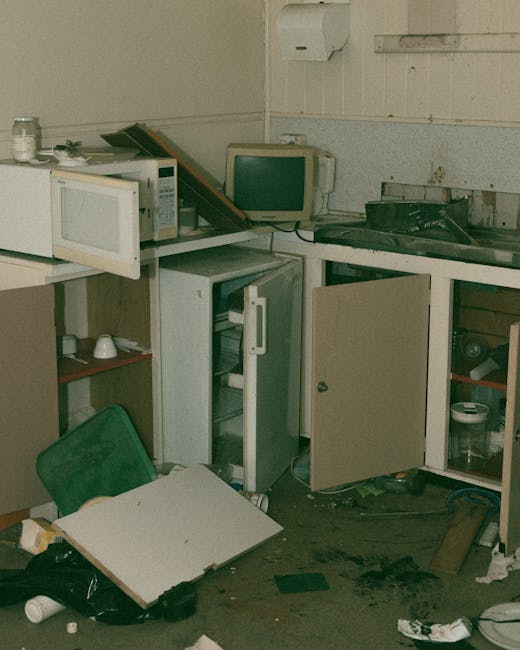
Picture a typical Battersea flat late on a Friday afternoon. Nothing dramatic. Just a place where life has piled up. There is a dead microwave on the kitchen counter, an old printer in the bedroom, a broken lamp in the hallway, and a small television that has not worked for months. None of it is outrageous on its own. Together, though, it starts to feel like the flat is shrinking by the hour.
The resident wants the place cleared before a move the following week. At first, they think they will manage in a few separate runs. Then they measure the lift. Too small for the television box. Then they realise the printer cables are tangled through a shelf unit. Then the fridge is still in use, so the kitchen can't be fully tackled yet. It's always the little details, isn't it?
The practical solution in that kind of scenario is to sort everything first, separate the electricals, and deal with them as part of a wider room-by-room clear-out. The broken lamp and printer go together. The microwave is wrapped for safer handling. The old TV is kept away from the main traffic route. The whole job becomes calmer once the items are grouped properly.
That is the pattern we see often: the problem is not lack of effort, it is lack of a tidy sequence. Once the sequence is clear, the disposal job stops feeling like a headache and starts feeling manageable again.
Practical Checklist
Use this checklist before any electrical disposal in a Battersea flat:
- List every item with a plug, charger, battery, or power supply
- Separate electricals from general rubbish
- Remove personal items, memory cards, and sensitive data where relevant
- Check whether the item is bulky, fragile, or awkward to move
- Confirm lift access, stair access, and any building restrictions
- Protect screens and glass surfaces with soft wrapping
- Keep hallways and exits clear
- Group items by type for easier collection
- Choose the disposal route that matches the volume and size of the items
- Keep a simple note of what was removed if you need records
If you can tick off most of these before collection day, you are already ahead. And honestly, that is where the difference is made.
Get a free quote today and see how much you can save.
Conclusion
Electricals disposal problems in Battersea flats, solutions are really about making a messy, awkward job feel controlled. Once you separate the items, think through access, and choose the right removal route, the whole thing becomes far less stressful. You do not need to overcomplicate it. You just need a sensible plan and a bit of forward thinking.
For small items, the solution may be a simple sort-and-remove approach. For larger or mixed flat clear-outs, a broader service can save time, hassle, and a fair few aching shoulders. The important thing is to stop the pile from sitting there indefinitely.
When a flat is clear, it feels lighter. Sounds a bit sentimental, maybe, but it is true. The room breathes again, and so do you.
Frequently Asked Questions
What counts as electrical waste in a Battersea flat?
Anything with a plug, battery, charger, or electrical component can count as electrical waste. That includes small appliances, screens, computers, printers, lamps, and many kitchen gadgets.
Can I put old electricals in the normal rubbish bin?
Usually, no. Electrical items should be separated from general household waste so they can be handled more appropriately. It is safer and avoids unnecessary disposal problems.
What is the easiest way to get rid of a broken TV in a flat?
The easiest route is usually to keep it separate, protect the screen, and arrange a removal method suited to bulky electrical items. In a flat, access and lift size often matter as much as the TV itself.
How do I dispose of small appliances like kettles or toasters?
Group them with other electricals, remove loose accessories, and make sure they are not mixed with general rubbish. Small items may still need careful sorting because of wiring, plugs, or internal components.
What should I do with old laptops and phones?
Remove personal data first if possible, then treat them as electrical items. Devices that store information deserve extra care, even if they look harmless in a drawer.
Do I need a special service for fridges or freezers?
Often, yes. Large appliances can be difficult to move and may need more careful handling than smaller household electronics. In flats, stairs, lifts, and access points make a big difference.
Can electrical disposal be combined with a flat clearance?
Yes, and that is often the most practical option if you have mixed items to remove. Combining jobs can reduce disruption and save you from doing the same sorting twice.
How far in advance should I plan electrical disposal before moving out?
As early as you can. Even a small clear-out gets more complicated when the move date is close and the lift, hallway, and parking arrangements all need attention at once.
What if my building has strict access rules?
Then it is worth checking them before collection day. Managed flats often have specific rules about lifts, loading, and communal areas, and ignoring them can cause delays.
Is it worth clearing electricals before a refurbishment?
Definitely. Removing old appliances and electronics before works begin makes the flat safer and gives tradespeople more room to work. It also reduces the chance of damage.
What is the biggest mistake people make with electrical disposal?
Leaving everything until the last minute. That is usually when access problems, packaging issues, and stress all arrive together. A little early sorting saves a lot of grief.
Where can I learn more about responsible disposal and related services?
You can explore the company's about us page for background, or review recycling and sustainability for a broader sense of how materials are handled. If you need help getting started, the contact us page is the natural next stop.
Can I get help with both electrical items and other flat contents at the same time?
Yes. If the electricals are part of a larger declutter, it often makes sense to clear everything together rather than tackling each category separately. That keeps the job simpler and, frankly, much less annoying.