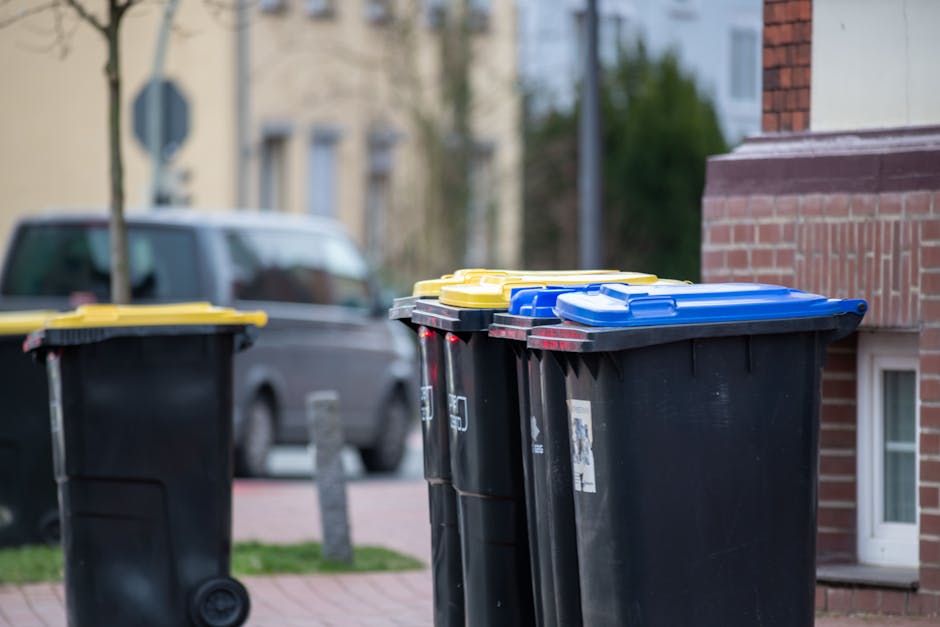
Wandsworth Council bulky waste rules for Battersea residents: a practical guide
If you live in Battersea, bulky waste can become a surprisingly annoying problem. One day it is a sofa that will not fit through the hall; the next it is a mattress, a broken wardrobe, or a pile of old garden bits that you definitely do not want sitting outside for a week. Understanding the Wandsworth Council bulky waste rules for Battersea residents helps you avoid missed collections, fly-tipping risks, and the classic "where on earth do I put this until then?" moment.
This guide breaks the process down in plain English. We will look at what bulky waste usually means, how council collections tend to work, what to check before booking, where people get tripped up, and when a private clearance option may be the more sensible route. Truth be told, it is rarely just about getting rid of an item; it is about doing it neatly, legally, and without turning a simple job into a hassle.
Why Wandsworth Council bulky waste rules for Battersea residents Matters
Bulky waste rules are not there just to make life fiddly. They exist to keep pavements clear, protect neighbours, reduce illegal dumping, and make sure large items are handled in a way that is safe for everyone. In Battersea, where many homes are flats, converted buildings, and busy terraced streets, this matters even more. A sofa left in the wrong place can block access, attract complaints, and create a real eyesore by tea time.
There is also the practical side. Council collections usually come with conditions about what can be taken, how items must be presented, and whether certain materials need to be separated. If you do not follow the rules, you may face delays or have items refused. Nobody wants to move a bulky bookcase down three flights of stairs twice. That is the sort of job that makes everyone oddly quiet for a minute.
For Battersea residents, the bigger issue is often space. Small front gardens, shared entrances, narrow stairwells, and limited storage can make bulky waste harder to manage than in a suburban house. Knowing the rules in advance helps you plan your clearance properly, whether you are replacing furniture, clearing a rented flat, or dealing with a sudden end-of-tenancy rush.
How Wandsworth Council bulky waste rules for Battersea residents Works
While exact procedures can change over time, the basic pattern is usually straightforward. You identify the item, check whether it is classed as bulky waste, book the collection in the council-approved way, and place the item out correctly for pickup. Simple enough on paper. In real life, the awkward part is usually the preparation.
Bulky waste normally refers to household items that are too large for standard wheelie-bin collection. Think sofas, wardrobes, tables, chairs, mattresses, beds, shelving, and similar large domestic items. Some collections may accept white goods or certain electricals, but this often depends on the local service rules, item condition, and booking requirements. If something contains hazardous components or requires specialist handling, it may need a different route.
It is wise to separate bulky household waste from other clearance types. For example, builders' rubble, mixed renovation waste, or commercial office items are generally a different category entirely. If you are dealing with those, a service such as builders waste clearance, office clearance, or broader waste removal may be more appropriate.
There is also a timing element. Council services may require advance booking and can have capacity limits, particularly around weekends or busy moving periods. If you are leaving a flat on short notice, that detail suddenly matters a great deal.
Key Benefits and Practical Advantages
Following the bulky waste rules properly brings more than just compliance. It can save time, reduce stress, and make the whole clearance feel oddly manageable. That sounds obvious, but in practice people often underestimate how much easier the day goes when the items are prepped correctly and the right service is chosen.
- Cleaner streets and shared spaces: Items are removed in an orderly way rather than left outside to become a nuisance.
- Less risk of refusal: If you follow the guidance, your collection is more likely to go ahead without problems.
- Better safety: Heavy lifting, sharp edges, and awkward furniture all need proper handling.
- Less chance of fines or complaints: Incorrectly dumped items can create issues for residents and landlords.
- More predictable planning: You can coordinate removals with decorating, tenancy changes, or a move.
Another practical advantage is sorting. Once you start thinking in categories, the job gets easier. A sofa is not the same as a broken fence panel. A mattress is not the same as mixed renovation offcuts. That sounds basic, but it prevents a lot of last-minute confusion.
If you need a fuller clear-out rather than one or two items, it can make sense to look at services like house clearance, home clearance, flat clearance, or furniture disposal depending on the type of waste involved.
Who This Is For and When It Makes Sense
This guide is useful for almost anyone in Battersea who has bulky items to remove, but it is especially helpful if you are in one of these situations:
- You are moving out and need to clear furniture quickly.
- You are replacing old household items and want the old ones gone properly.
- You manage a rental property and need to clear left-behind items.
- You live in a flat with limited storage and shared access.
- You have a garage, loft, or spare room full of items that need sorting.
- You are comparing council collection against a paid clearance option.
It also makes sense if you are unsure whether your items are actually bulky waste or something else. A battered chair, for instance, is a very different prospect from plasterboard, broken tiles, or office desks. The wrong assumption can lead to a wasted booking, and nobody needs that on a Monday morning.
For larger, mixed, or awkward jobs, you may find it easier to combine more than one clearance route. A domestic move-out might involve furniture clearance plus a loft clearance, while a tired garden corner may call for garden clearance. The best option is the one that matches the actual waste, not just the nearest label.
Step-by-Step Guidance
Here is a simple, practical way to handle bulky waste in Battersea without making the process harder than it needs to be.
- Identify each item clearly. Make a list of what needs removing. Include size, quantity, and whether it is furniture, electrical, metal, or general household waste.
- Check whether the item is accepted. Council collections often have exclusions. If an item contains hazardous materials or needs specialist treatment, it may not qualify.
- Separate what can be reused, recycled, or thrown away. This is the part people skip. It matters.
- Prepare the item for collection. If you need to dismantle furniture, do it safely. Remove loose contents and keep access paths clear.
- Book the collection in advance. Make sure you understand any payment, appointment, or access requirements.
- Place the items out exactly as instructed. Timing, location, and presentation can all affect whether the collection is successful.
- Keep proof of booking. A confirmation email or reference number can be helpful if there is a mix-up.
If you are using a private provider instead, the same logic still applies. Good preparation reduces labour time, avoids extra charges, and makes access easier in tight Battersea streets. It also tends to make the crew happier, which is never a bad thing.
Expert Tips for Better Results
Small details make a surprisingly large difference. In our experience, the people who have the smoothest collections are not necessarily the ones with the fewest items. They are the ones who prepare well.
- Measure awkward items before booking. A sofa that "should fit" often turns into a corridor puzzle.
- Check access all the way to the pickup point. Stairs, locked gates, parked cars, and narrow hallways can delay removal.
- Bundle similar items together. It saves time if furniture, loose waste, and recycled materials are separated.
- Protect communal areas. A bit of cardboard or a blanket can help prevent scuffs in tight shared hallways.
- Choose the right clearance type. If the job has more than bulky waste in it, a broader service may be better than forcing it into one category.
One useful rule of thumb: if you are looking at the item and thinking, "this is going to be awkward," you are probably right. That is the moment to plan rather than improvise.
If the job is larger than a single council collection can reasonably handle, it may be worth comparing a council route with a commercial collection. Services like pricing and quotes can help you understand the likely cost of a more flexible option, especially when time is tight.
Common Mistakes to Avoid
Most bulky waste problems come down to simple mistakes rather than complicated ones. The good news is that they are easy to avoid once you know what to watch for.
- Leaving items out too early. That creates clutter, can bother neighbours, and may breach collection rules.
- Assuming all large waste is treated the same. Furniture, electricals, builders' waste, and garden debris do not always belong in the same booking.
- Not checking access. A booked collection is no use if the item cannot safely be moved to the pickup point.
- Mixing prohibited materials into a collection. Hidden batteries, liquids, or sharp waste can be a real issue.
- Forgetting to measure doorways and stairwells. It sounds minor until the wardrobe gets wedged halfway down the stairs.
Another common mistake is underestimating the amount of waste involved. One sofa becomes a sofa, two chairs, a mattress, a sideboard, and suddenly you are dealing with a mini clearance rather than a single bulky item. That is where a broader service can be easier than piecemeal collection.
Tools, Resources and Recommendations
You do not need fancy tools for bulky waste, but a few basics help a lot. A tape measure, work gloves, a trolley or sack truck if appropriate, strong bags for loose contents, and a torch for dim lofts or garages can make the job much smoother. If you have ever tried to work in a dark storage space at 7:30 in the evening, you will know why the torch matters.
For larger household projects, the most useful resource is often a joined-up clearance plan. For example, if your project includes furniture, storage clutter, and general household items, it may be cleaner to arrange one wider collection rather than separate jobs. In that case, home clearance or house clearance may be the better fit. If the problem is a messy storage area, garage clearance is often the most efficient starting point.
It is also worth keeping a simple written list of what is going. Sounds old-fashioned, perhaps, but it helps stop that strange pre-collection panic where everyone starts asking, "Was that lamp meant to stay?"
Law, Compliance, Standards, or Best Practice
For Battersea residents, the key compliance principle is straightforward: waste should be disposed of responsibly, through the correct route, and in a way that does not create nuisance, obstruction, or fly-tipping risk. Local council collections and private clearances both sit within that wider duty of care. In plain English, you should be able to show that you handled waste properly rather than just leaving it for someone else to deal with.
It is also sensible to think about environmental handling. Reuse and recycling are generally preferable where practical, especially for furniture and household goods that still have life left in them. Not every item can be saved, obviously. But a service that aims to sort waste carefully is usually better than one that treats everything as the same heap.
Health and safety matters too. Lifting awkward items, cutting up furniture, and moving items through shared areas all carry risk. If a job feels too heavy, too sharp, or too chaotic, step back and plan it properly. That is not weakness; that is common sense. And common sense saves backs.
If you are dealing with waste in a way that touches business premises, building work, or higher volumes, the expectations become even more important. In those cases, services such as business waste removal may be more appropriate than a household collection.
Options, Methods, or Comparison Table
Choosing the right route depends on the type of waste, how quickly it needs to go, and how much help you want. Here is a simple comparison to make the decision easier.
| Option | Best for | Typical strengths | Possible drawbacks |
|---|---|---|---|
| Council bulky waste collection | One-off household bulky items | Usually straightforward for eligible items; suited to residents who can wait for a slot | May have limits, booking rules, and less flexibility on timing |
| Private bulky item removal | Urgent, awkward, or mixed jobs | More flexible scheduling; can handle larger or more varied clearances | Often costs more than council collection |
| Full property clearance | Moves, bereavement clearances, landlord resets | Covers multiple item types in one visit; less coordination | May be more service than you need for a single item |
| Specialist clearance | Lofts, garages, gardens, offices, or builders' waste | Better match for niche waste types | Needs the right provider and the right item category |
There is no single "best" option for everyone. If you only have one mattress and can work within the council process, that may be fine. If you have a full flat to clear by Friday afternoon, you probably need something more flexible. That is just the reality of it.
Case Study or Real-World Example
Picture a Battersea resident living in a third-floor flat off a busy road. They have a worn sofa, a broken bed frame, and a couple of shelves from a home office that no longer exists. On paper, it looks simple. In practice, the stairwell is narrow, the communal entry is shared, and the sofa does not turn cleanly on the landing. A last-minute attempt to move everything without planning could easily damage the wall paint or annoy the neighbours.
The better approach is to identify the items, measure the largest piece, check access, and decide whether the council route is suitable or whether a more flexible collection is the smarter choice. In this kind of situation, a resident might decide that the items are part of a wider flat clearance rather than a single bulky waste job. That slightly broader view saves time and tends to reduce stress.
A similar thing happens with lofts and garages. A person thinks they have "just a few boxes" and then discovers cracked chairs, a bike, a lamp, and a pile of odds and ends from three different moves. Classic. A focused clearance plan turns that jumble into a proper job instead of a never-ending one.
Practical Checklist
Use this checklist before you book or set items out for collection.
- Have I identified every bulky item that needs removing?
- Do I know whether the item is household bulky waste, furniture, electrical, builders' waste, or something else?
- Have I checked for any restricted materials or special handling needs?
- Is the access route clear from the item to the collection point?
- Have I measured the largest awkward item?
- Have I separated items that could be reused, recycled, or donated elsewhere?
- Do I have confirmation of the booking or collection arrangement?
- Have I checked when the items should be placed out?
- Is there any risk of blocking communal space, pavements, or fire escapes?
- Would a broader clearance service be more efficient than a one-off collection?
If you can tick most of those boxes, you are already ahead of the game. Not glamorous, admittedly, but effective.
Get a free quote today and see how much you can save.
Conclusion
The main thing to remember about Wandsworth Council bulky waste rules for Battersea residents is that planning matters more than people expect. Know what you are getting rid of, separate the waste properly, check access, and choose the right collection route for the job. That alone will prevent a lot of frustration.
For small, straightforward household items, the council route may be the right fit. For larger, mixed, urgent, or awkward clearances, a tailored clearance service can save time and spare you the awkward shuffle of trying to make a single collection do too much. Either way, the aim is the same: a cleaner space, less stress, and no unnecessary drama on the pavement outside.
And honestly, once the last heavy item is gone and the room sounds a bit emptier, there is a small sense of relief that is hard to beat. Clean floor, clear mind. More or less.
Frequently Asked Questions
What counts as bulky waste for Battersea residents?
Bulky waste usually means large household items that are too big for standard bin collections, such as sofas, beds, wardrobes, tables, and similar furniture. Some items may need special handling depending on their material or condition.
Can I leave bulky waste outside my home before collection day?
Usually, you should only place items out in line with the collection instructions and timing you were given. Leaving them out too early can create obstruction, invite complaints, or lead to issues with the collection.
Are mattresses and sofas usually accepted?
Often they are, but the exact acceptance rules can vary depending on the collection service and any condition requirements. It is sensible to check before booking rather than assume every large item is eligible.
What if I have more than one bulky item?
If you have several items, it is worth checking whether they can all be included in one booking or whether the job is better handled as a larger clearance. A few items can turn into a much bigger task than expected, especially in flats.
Do I need to dismantle furniture before collection?
Not always, but dismantling can help if the item is too large to move safely or if access is tight. If you do dismantle furniture, do it carefully and keep screws, glass, and sharp edges under control.
What should I do with items that are broken but still partly usable?
If something can be reused or repaired, it is worth considering that first. If not, it can still be collected as waste, but a careful sort can reduce what needs to be thrown away.
Is council bulky waste collection better than a private clearance service?
It depends on the job. Council collection can work well for a small number of suitable household items. A private service may be better if the clearance is urgent, large, mixed, or difficult to access.
What happens if my items are not eligible for bulky waste collection?
If the items are excluded, you may need a different collection route. For example, builders' waste, office items, or mixed household clearances may be better handled through a more suitable service.
How can I avoid missing a collection?
Keep your booking details, make sure the items are ready on time, and confirm access is clear. A lot of missed collections happen because the item was not prepared properly or because the pickup point was blocked.
What is the safest way to move bulky items in a Battersea flat?
Use two people where possible, protect walls and floors, and check the route before you start. If an item feels too awkward to carry, stop and reassess rather than forcing it through a tight stairwell.
Can bulky waste be mixed with garden or loft contents?
Sometimes a larger clearance covers several types of waste, but it depends on what is involved. A few old chairs are one thing; a mix of furniture, loft clutter, and garden debris is usually better handled as a broader clearance plan.
Where should I start if I am clearing a whole property?
Start with the largest and most awkward items, then work through the smaller ones. If the job is more than a simple collection, a service such as home clearance or house clearance may give you a cleaner, faster result.